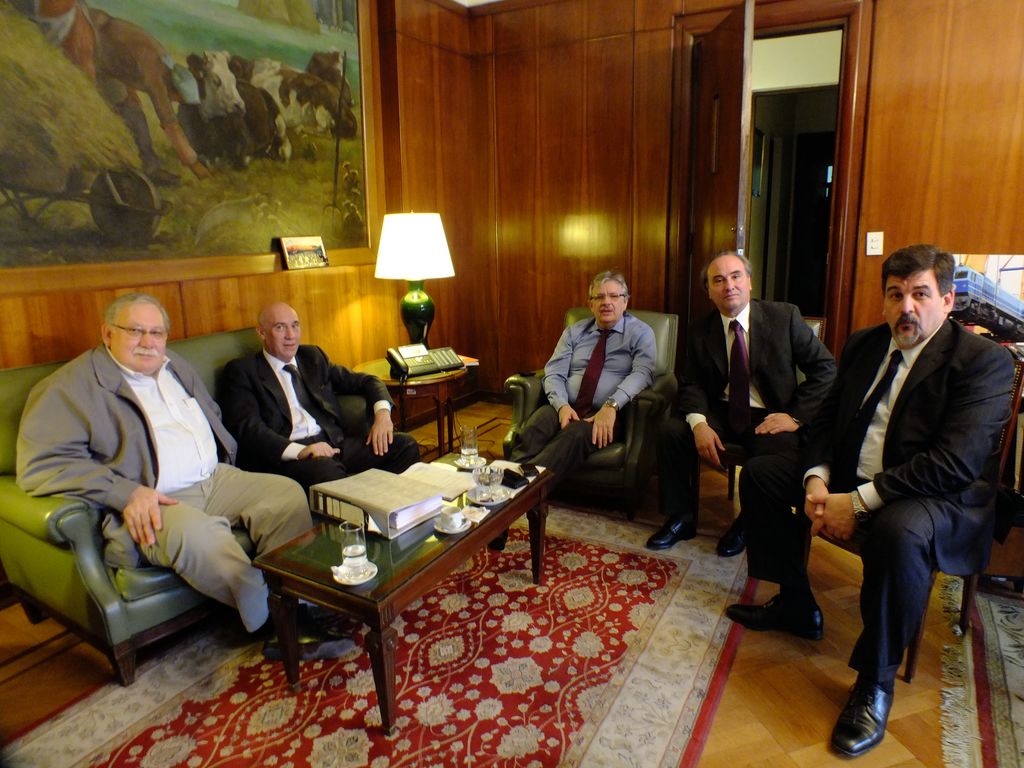
Importante reunión con el Secretario de Transporte de la Nación

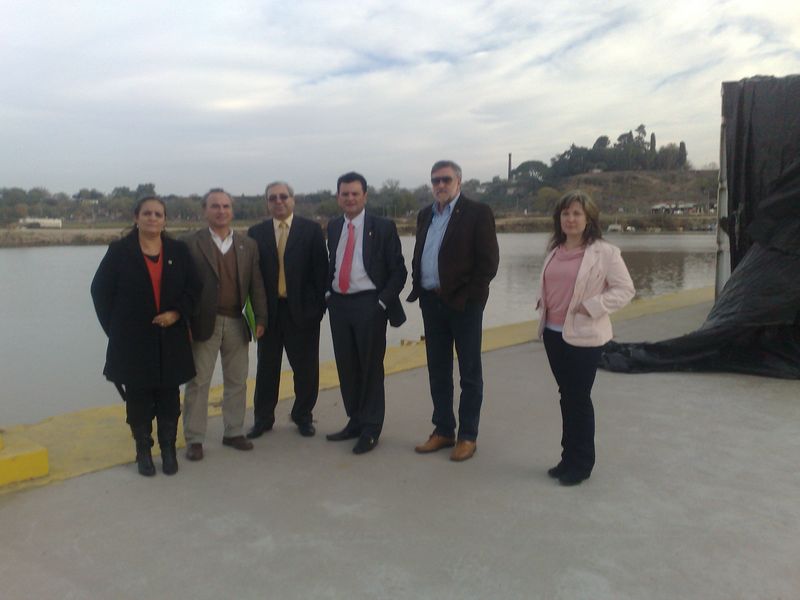
El Presidente del  Consorcio de Gestión del Puerto de San Pedro Sr. Mariano Veiga y el Administrador del Puerto de San Nicolás Sr. Luis Herrera, acompañaron al Subsecretario de Actividades Portuarias de la Provincia de Buenos Aires, Dr.Luis Abot, a una reunión de trabajo que se realizó en el Ministerio de Economía de la Nación, en la tarde del jueves 27 de julio, con el Secretario de Transporte de la Nación, Ingeniero Juan Pablo Schiavi, junto a quien participó el Subsecretario de Puertos y Vías Navegables de la Nación Sr. Ricardo Luján.
En este ámbito se abordaron las problemáticas de ambos puertos públicos de la Provincia y se remarcó el significante crecimiento de las cargas exportadas tanto desde San Pedro como de San Nicolás, en el corriente año.
Se puso en conocimiento del Secretario de Transporte el papel preponderante que tiene el puerto de San Pedro en la exportación de frutas cítricas frescas, provenientes del NOA y el NEA, y la importancia que tiene el mantenerlo operativo para las economías de estas dos regiones del país.
También se manifestó la voluntad de las administraciones de estos puertos para que sean visibilizados como la salida natural de las exportaciones agropecuarias de los partidos del norte y noroeste de la Provincia de Buenos Aires, cumpliendo así con la premisa de ser puertos públicos al servicio de las producciones exportables provinciales.
En la charla con el Subsecretario Ricardo Luján se pudo plantear además la necesidad de obras de infraestructura para que el Puerto de San Pedro pueda trabajar con carga consolidada en contenedores. Se repasó el avance de las obras planificadas, con sus respectivos proyectos ejecutivos ya realizados (lo que les da la posibilidad de ser incorporadas en el presupuesto del ministerio del año 2012) y la voluntad del Secretario y del Subsecretario de acompañar a la gestión del Gobernador Daniel Scioli en el crecimiento de los puertos provinciales y su desarrollo, reconociendo al sistema portuario de la Provincia de Buenos Aires, como uno de los más importantes del país.
Resta aguardar tras esta fructífera reunión la continuidad de todas las gestiones realizadas en beneficio de nuestro Puerto y por ende de todos los sectores vinculados con su actividad.
 

Acto por el Día de la Prefectura

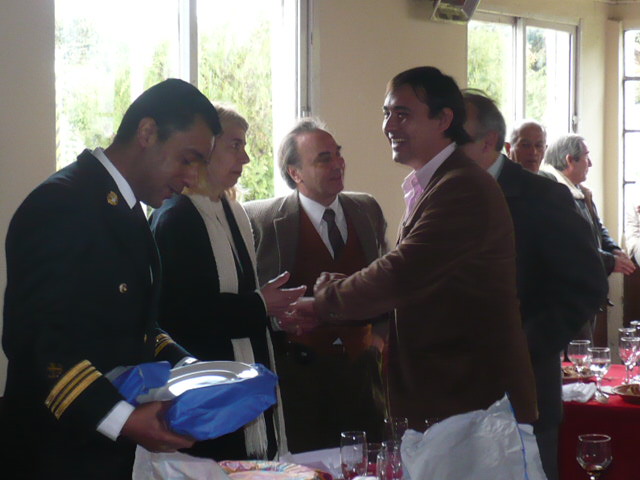
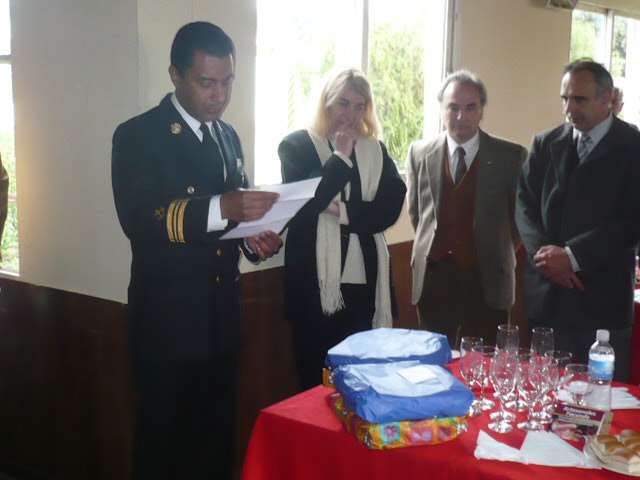
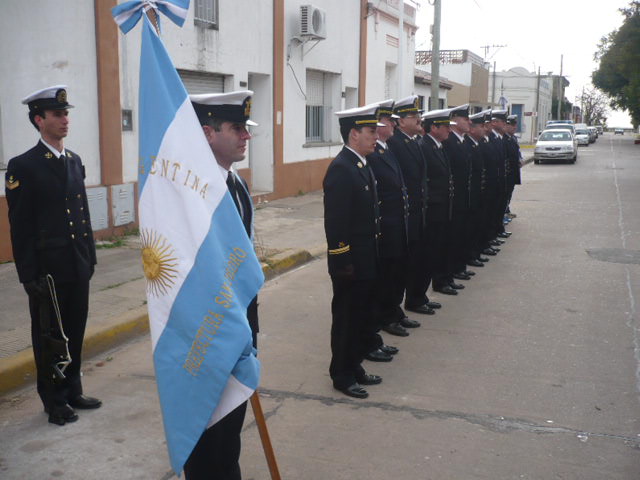
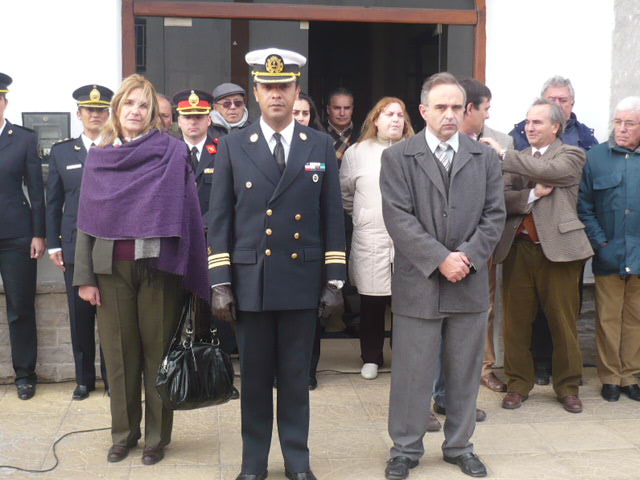
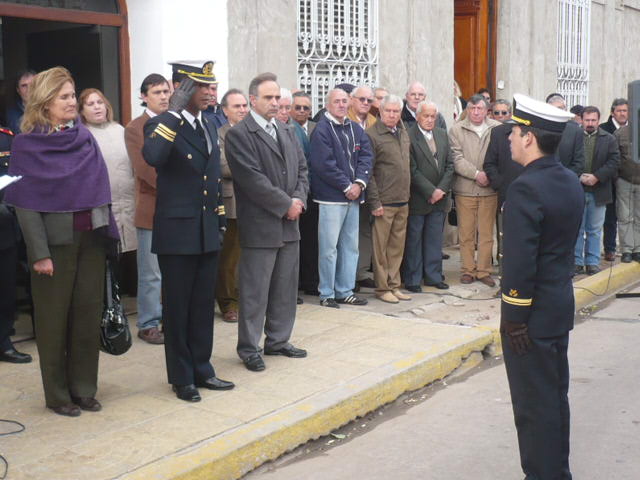
El pasado 30 de Junio se realizó como es costumbre, el acto por el aniversario de la creación de la Prefectura Naval Argentina. En el mismo estuvieron presentes integrantes del Consorcio de Gestión del Puerto de San Pedro acompañando a los integrantes de la Prefectura San Pedro con la que se interactúa de manera cotidiana en las actividades portuarias. Tras las estrofas del Himno Nacional Argentino, el Prefecto Norberto Adrián Posadas leyó un mensaje con un repaso de las funciones que cumple la fuerza y con un panorama sobre las actividades principales que los ocupan en la actualidad. "Somos esencialmente servidores públicos y honramos lo que ello implica, el respeto profundo por las instituciones y las autoridades del estado, el estricto cumplimiento de las pautas políticas emanadas por el ejecutivo nacional a través del ministerio al que pertenecemos”, expresó.

El Director de la UNPRE visitó el Puerto

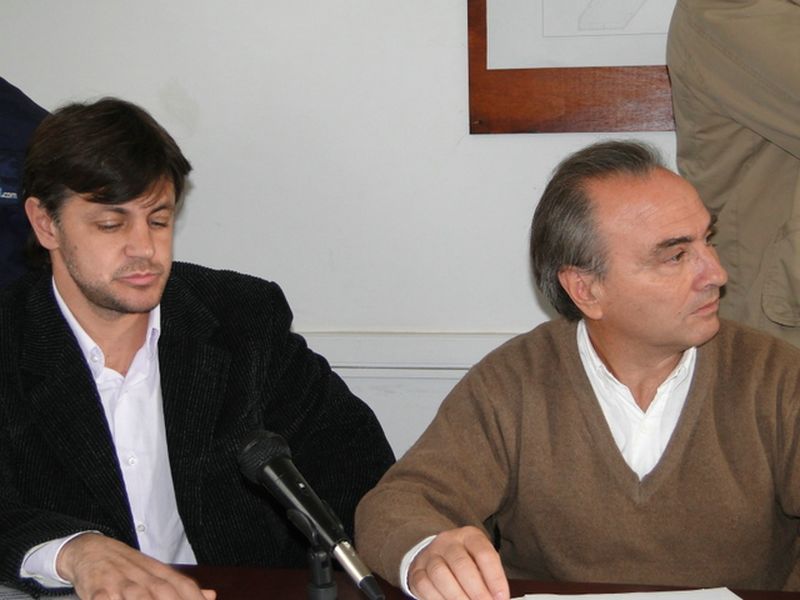
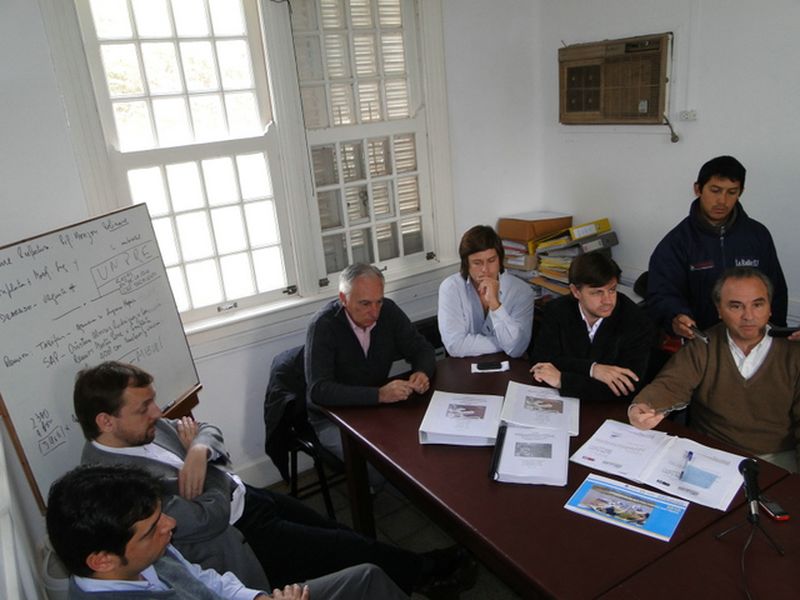
En la mañana del viernes 10 de junio, visitó el Puerto de San Pedro, el Director Nacional de Preinversión del Ministerio de Economía, Mauricio Giraudo. En su carácter de titular del programa que promueve la implementación de políticas de desarrollo sustentable, y el apoyo a proyectos orientados al desarrollo local, regional y nacional, mediante el diseño de obras de infraestructura, Giraudo mantuvo una reunión con las autoridades del Consorcio de Gestión y ofreció una conferencia de prensa en la que ratificó la voluntad de continuar respaldando el desarrollo técnico de nuevos proyectos para el Puerto de San Pedro.

Hasta el momento, a través del Programa se ha respaldado al Puerto de San Pedro en la elaboración y presentación de importantes proyectos que se encuentran a la espera del financiamiento nacional o internacional que permita el desarrollo de las obras. Entre ellos, el cierre de la dársena de cabotaje y ampliación de frente de atraque, readecuación de infraestructura y pavimentación del Espigón Nº1, y nuevo muelle para contenedores en el Espigón Nº2. Existen otras demandas desde el Puerto que fueron planteadas ante el Sr. Giraudo y que a partir de las charlas mantenidas y la recorrida efectuada, serán evaluadas para el futuro.

En la conferencia de prensa efectuada ante la prensa regional y previa a una recorrida por el Puerto, el Presidente del Consorcio, Mariano Veiga destacó la importancia de la visita y adelantó a mediados de Agosto, estará listo el proyecto de pre-factibilidad que,  con resultado positivo, desarrolló la planificación de  una playa de contenedores en el área del Club Pesca y Casting, tomando como base las 6 hectáreas que pertenecen al puerto. 

La solicitud efectuada ante el funcionario visitante, fue la elaboración a partir de esta pre-factibilidad, de  proyecto ejecutivo, "ya como una terminal, viendo todo el puerto de San Pedro como una terminal de contenedores”, señaló. 

El nuevo proyecto deberá incluir, un pormenorizado estudio y análisis de las cargas  disponibles en el "hinterlan" (área de influencia) del puerto de San Pedro sobre 200 km a la redonda, y las cargas de frutas frescas que hoy parten desde otros puertos en contenedores.

Además deberá contemplar las competencias portuarias de la zona, (Eje. Rosario, Campana) y las ventajas comparativas favorables y las debilidades, que reqeurirán de acciones concretas para superarlas.

Veiga fue contundente al señalar que contar con un proyecto de esas características significaría ni más ni menos que un plan de desarrollo para los próximos 60 años.  "Nosotros creemos que a fin de año o más tardar en marzo del año que viene se la UNPRE nos facilitará la posibilidad de ese desarrollo y así evitar el desgaste de salir a buscar más dinero para proyectos ejecutivos”, destacó.

Visita de legisladores del MERCOSUR

Acompañados por el sampedrino Germán López, Secretario de Coordinación y Consultación Política de la Unión de Parlamentarios del MERCOSUR, visitaron la ciudad los legisladores brasileños, Liza Prado, Elizeu Mattos, María Helena Pereira y Flavio Alves Monteiro, diputados de los estados de Santa Catarina, Río Grande do Sul y Minas Gerais.
 
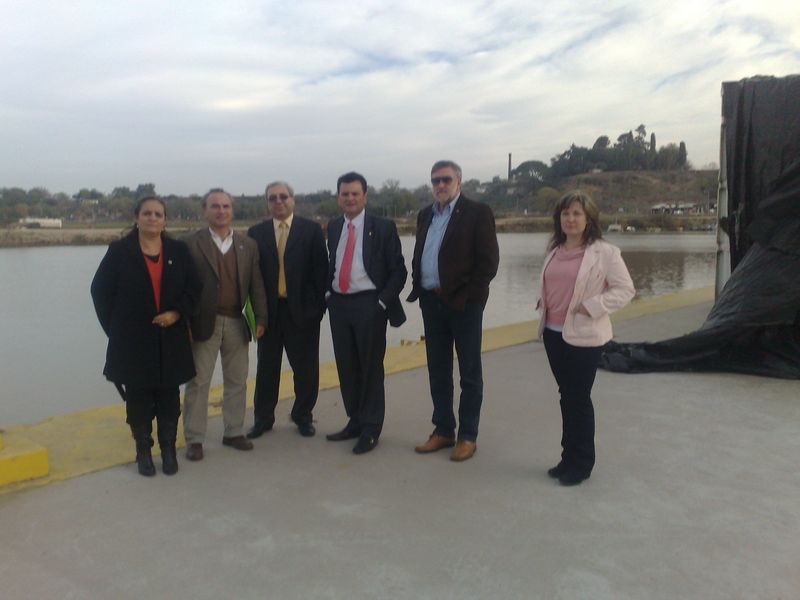
Los visitantes, que llegaron a Argentina para participar de la Asamblea General de la U.P.S.M., efectuaron por la mañana una visita a la Estación Experimental del INTA San Pedro y por la tarde fueron recibidos en el Puerto, por representantes del Consorcio de Gestión, encabezados por el Sr. Presidente, Mariano Veiga.
 
La recorrida por el Puerto y las conversaciones giraron alrededor de la inscripción realizada por el Puerto de San Pedro en Corredor Bi-Oceánico que precisamente interesa tanto a Argentina como a Brasil en relación con Chile. La charla sirvió para remarcar las intenciones existentes de respaldar esta iniciativa que representa una proyección sumamente importante en el futuro de nuestro puerto.

Location

The port of San Pedro is located on the right bank of the Paraná River, at 71 miles from the south of Rosario (Province of Santa Fe). Besides, it is located at 151 miles from Buenos Aires through Martín García Island and at 115 miles through the Mitre Channel, and at about 170 kilometers from the federal capital on the motorway. According to the coordinate system WGS 84, the geographical location coordinates are: latitude 33` 41´ degrees South, and longitude 59´´ 39´ 05´´ degrees West. The San Pedro port jurisdiction covers an estimate surface of 219,583.35 m2. It begins at the overseas dock up to Mansa Life grounds. In the front of the port there is an inlet that allows the anchoring of ships waiting for loading quay. There is an auxiliary inlet for the following operations: load-lightening, fuel supply, etc.


Search in GOOGLE EARTH (HERE)

See conventional Map- – – –  (HERE)

Download CHART- – -(Oceanic)- – – (HERE)

Download CHART- – – – Road and Landfall – – –  (HERE)

San Pedro fue uno de los dos puertos con mayor aumento en el movimiento

El movimiento de mercaderías en los puertos de la Provincia aumentó a 13 millones de toneladas. Los puertos de Quequén y San Pedro fueron las terminales con mayor cantidad de despachos Quequén y San Pedro, con el 172,91% y el 155,04%, fueron las terminales de la provincia que mayor aumento en los movimientos portuarios obtuvieron seguidos por el sistema Paraná Inferior (San Nicolás, Zárate, Campana) con el 92,42%, Dock Sud (62,53%), Bahía Blanca (50,28%), Mar del Plata (42,44%) y La Plata (41,92%). La actividad en los puertos bonaerenese creció 20% en el primer cuatrimestre Según explicó el ministro de la Producción, Martín Ferré, "este crecimiento se ve reflejado en la decisión del gobernador, Daniel Scioli, de diseñar una política portuaria para la provincia de Buenos Aires, a partir de potenciar el enclave estratégico que tienen en la economía regional y procurar las condiciones que profundicen la tendencia inversora actual".
"Por esto, desde el inicio de nuestra gestión los puertos de la Provincia de Buenos Aires están siendo pensados estratégicamente como todo un sistema portuario integrado que crea más posibilidades para la exportación e importación de nuestros productos, porque permiten operar con buques de gran calado y facilitan a los productores reducir costos al elegir el puerto más conveniente", agregó.
Según un informe elaborado por la Subsecretaría de Actividades Portuarias del Ministerio de la Producción provincial, en lo que va del año los puertos bonaerenses registraron un movimiento de mercaderías de 13.164.950 de toneladas en comparación con 11.113.004 toneladas del año pasado, lo que marcó un crecimiento del 18,46 por ciento. En tanto, los movimientos por exportaciones crecieron en el mismo período un 17,63% en relación a 2010. En cuanto a la composición por sectores, el movimiento de frutas aumentó un 773% con respecto a 2010 y el de grandes vehículos y maquinarias un 680%, seguido por el tráfico de cereales y oleaginosas (84,41%), cargas generales (84,41%) y productos químicos y petroquímicos (43,96%).

Accesibilty

ACCESIBILITY

Fluvial access

San
Pedro Inlet
: 
It is located between kilometer 276 and kilometer 274, on the left bank of the Paraná River and its water surface is of about 30,000 m2. It allows the anchoring of three ships waiting for loading and unloading. There is also an auxiliary inlet, which allows the anchoring of ships for the following operations: load-lightening and fuel supply. The access channel has 1,000 meters with 80 meters in length, and a maximum natural river depth of 30 feet that makes it one of the deepest ports of the Paraná River. Tugboats are not needed.

Channel of access to the Port of San Pedro: 
Ships can enter the port through a channel of 2,400 meters long by 60 meters wide.

 
Road access
The port of the city of San Pedro is connected with the center and North of the country, the Province of Buenos Aires and the Federal Capital by means of the national motorway “Ruta Nº9”. Road Nº 1001 is an external way of communication which makes the entry easier without needing to cross the city. Furthermore, San Pedro is connected with national road Nº 8 and so with all the central and western zones of the country by means of road 191.
 
Railway access
The Mitre railway station is located at 4 kilometers of the complex. It has no branch line connected to the port area.


Management Consortium of the Port of San Pedro

Consortium
Consorcio de Gestión del Puerto de San Pedro (Management Consortium of the Port of San Pedro)

THE CONSORCIO DE GESTIÓN DEL PUERTO DE SAN PEDRO is a non-state entity governed by public law, created by Decree number 5/05 of the Provincial Executive Power, dated January 3th 2005.The Consortium is governed by its own statute and has legal, financial, countable and administrative individuality. It has full legal capacity to perform all legal acts and to enter into all the necessary contracts for the fulfillment of its subject matter and duties.

It is subject to legal norms of national or provincial Public Law, as regards the duties related to public interest. The provisions of Private Law apply to all the remaining duties. The Consortium operates in the land port area and the adjoining acuatic areas, limits that were determined in the transfer from the National State to the Provincial State and from the latest to the Management Consortium. This port area is a provincial public property.

Subject matter and duties
The Consortium main duties can be summed up hereinbelow:
– To manage and exploit the PORT OF SAN PEDRO, by giving the concessions, leases, permissions or in rem rights of antichresis for commercial, industrial or recreational exploitation of the port terminals, the existing quays or the ones that may be built.  
– To manage and render services on its own or by means of third parties to ships or naval devices and loads in the CONSORTIUM’s quays. 
– To elaborate a port regulatory plan project and plan its future development.  
– To authorize the construction of commercial, industrial or recreational port terminals.
– To plan, run and carry out on its own or by means of third parties the dredging, buoyage in the access Channel and its docks.
– To enter into contracts with Argentinian or foreign public or private entities for the fulfillment of its subject matter and duties.
– To coordinate the different services rendered by official departments and private individuals to navigation, ships and loads.
– To collaborate in the application of agreements that cover police or international safety regulations.
– To draw up and approve the bid terms and conditions for concessions, leases, etc., of the port terminals and/or port services.
– To award and terminate concessions, leases and use permissions of port terminals.
– To set and modify the tariffs, taxes and fines or pecuniary penalties.
– To approve the Annual Budget, Annual Report, Inventory, Accounts, Investments Plans and so on.
– To appoint, promote, and dismiss the CONSORTIUM staff.
– To contract consultancy service, expert advice, and technical or scientific studies.  

The Port of San Pedro

 
According to the requirements imposed by international commerce, we can say that there are a few countries that have no ports acting as link with the rest of the world. The ports are  “doors” that connect a certain country with other countries in order to maintain business relations and make possible the people passage. With regard to Argentina and concerning its geographical location, the role of ports is outstanding if we also consider natural condition of land and industry production. The geographical location of San Pedro offers some important aspects as regards economy and geography: it is on the North of the Province of Buenos Aires, in a very rich agricultural area; equidistant from the two biggest and more developed cities of the country; on the more important national and provincial land ways of communication; and on the bank of the Paraná River, with an easy arrival to the navigable channel.

All these conditions determined, more than 75 years ago, the decision of building a railway network and a port with elevators in order to be able to transport an important part of the regional cereal production and load it in ships with destination to other countries.  
From May 25th 1933 when the first loaded ship sailed, and until now, the port activity has been constant.  

The transport by sea, the ports and the waterways have become the main Argentinian variable to improve competitiveness, due to the fact that world consumption centers are very far. Therefore the efficiency is very important to guarantee country competitiveness to a large extent.
The port services quality has become an imperative within business. The competition among ports, either at national or international level, impose on them  the need of answering better to the demand of important customers in the transport and logistics markets.
During many years the ports of our country have performed tasks as closed and centralized institutions, but the growing requirements of business at worldwide level have led to a change in ports administrative and operative structures. Consequently ports could be able to develop and diversify. 
From 2005, date of creation of the “Consorcio de Gestión del Puerto de San Pedro”, we work with the only scope of establishing the local Port as a highly competitive port with great quality, efficiency and professionalism.
We are following this path little by little, but we have already obtained advances and improvements.
The port of San Pedro has many natural advantages compared with other ports of the zone. These advantages will be increased with the improvement of technology and the enlargement of services.
Today we have turned the port of San Pedro into A RELIABLE PORT that is ENGAGED WITH FOOD EXPORT. We will continue working in this way so that every time more exporters choose us and we will try to satisfy all the users of our port.  

Management Report 2008

The Management Report 2008 of the Consortium of the port of San Pedro is available for all the interested parties. In that Report there is information about the infrastructure extension and the improvement of services, port area, accessibility of the port, investments carried out with provincial funds and Consortium funds, changes to the rate Schedule, agreements on training and human resources, evolution of the operations, types of loads, financial economic analysis, investments, use permissions and status of licensees, and many other important aspects. The complete version in PDF file can be downloaded, PLEASE CLICK HERE.